Flock Safety System
Automatic License Plate Readers (ALPR) have long helped law enforcement in solving crimes. ALPRs capture computer-readable images of license plates, allowing law enforcement agencies to compare plate numbers against those of stolen cars or cars driven by people suspected of being involved in criminal activities.
The information by ALPR cameras can help determine whether a vehicle was at the scene of a crime and to discover vehicles that may be associated with each other. Law enforcement agencies can choose to share their information with other agencies. The cameras can also integrate information from national or state crime databases to provide real-time alerts when a vehicle associated with a known suspect or a stolen vehicle passes the camera.
According to the National Conference of State Legislatures, when employed ethically and objectively, ALPRs are an effective force-multiplying tool for law enforcement. A 2011 study by the Police Executive Research Forum concluded that ALPRs used by Mesa, Ariz., Police resulted in “nearly 3 times as many ‘hits’ for stolen vehicles, and twice as many vehicle recoveries.”
Flock Safety communities have reported overall crime reductions of over 70 percent after a period of time utilizing the ALPR system. In some areas, that included an over 60 percent reduction in non-residential burglaries, 80 percent reduction in residential burglary, and an over 40 percent reduction in robberies.
What is Flock Safety?
Flock Safety is a public safety operating system that helps communities and law enforcement work together to eliminate crime, protect privacy, and mitigate bias. We build devices that capture objective evidence and use machine learning to detect and deliver unbiased investigative leads to law enforcement. Flock Safety communities have reported crime reductions of up to 70 percent.
Today, there are over 1,500 Flock Safety communities; we partner with 1200+ law enforcement agencies. The Buffalo County Sheriff’s Office has partnered with the Kearney Police Department under their MOU with the FLOCK Safety System.
Kearney Police Department Flock Transparency Portal
Buffalo County Sheriff’s Office Automated License Plate Reader (ALPR #1346)
Nebraska Revised Statutes – Automatic License Plate Reader Privacy Act 60-3201 to 60-3209
Flock ALPR Data Year End Report
Vigilant Mobile ALPR Year End Report
The Desktop Buffalo Alert Application Is No Longer Supported
As of May 1st, 2014, Buffalo County Emergency Management will no longer support the Desktop Buffalo Alert Application. For continued weather alerts and emergency information please SIGN UP for our NEW ‘Cell Phone” and “E-mail” alerts at BuffaloWatch.net. Follow us on Facebook "Emergency Management Buffalo County/City of Kearney" and on Twitter @BuffaloCoNeEM. We apologize for any inconvenience the discontinuation of this desktop alert app may cause.
Wireless Emergency Alerts
To enhance public safety, a free Wireless Emergency Alerts service is rolling out. WEA (pronounced “wee”) messages are text-like alert messages received by your mobile device during an emergency in your area. The purpose of WEA is to provide an increasingly mobile American public with a free and fast way to receive critically important information.
Frequently Asked Questions:
Why is this important to me?
Alerts received at the right time can help keep you safe during an emergency. With WEA, alerts can be sent to your mobile device when you may be in harm’s way, without need to download an app or subscribe to a service.
What are WEA messages?
Wireless Emergency Alerts (WEA) are emergency messages sent by authorized government alerting authorities through your mobile carrier. Government partners include local and state public safety agencies, FEMA, the FCC, the Department of Homeland Security, and the National Weather Service.
What types of alerts will I receive?
- Extreme weather, and other threatening emergencies in your area
- AMBER Alerts
- Presidential Alerts during a national emergency
What does a WEA message look like?
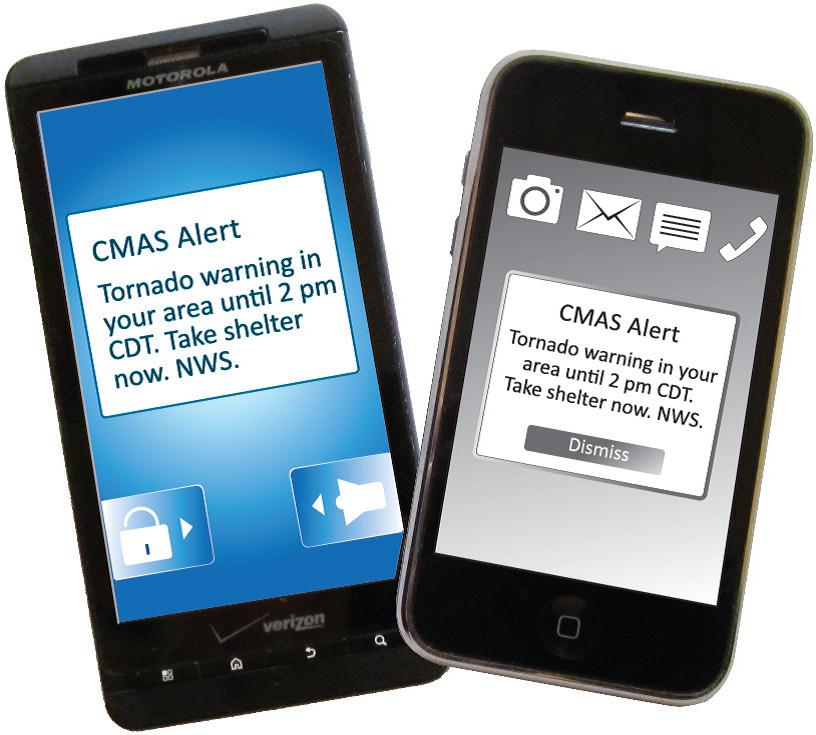
WEA will look like a text message. The WEA message will show the type and time of the alert, any action you should take, and the agency issuing the alert. The message will be no more than 90 characters.
How will I know the difference between WEA and a regular text message?
WEA messages include a special tone and vibration, both repeated twice.
What types of WEA messages will the National Weather Service send?
- Tsunami Warnings
- Tornado and Flash Flood Warnings
- Hurricane, Typhoon, Dust Storm and Extreme Wind Warnings
- Blizzard and Ice Storm Warnings
What should I do when I receive a WEA message?
Follow any action advised by the emergency message. Seek more details from local media or authorities.
Will I receive a WEA message if I’m visiting an area where I don’t live, or outside the area where my phone is registered?
Yes, if you have a WEA-capable phone and your wireless carrier participates in the program. For information about which mobile devices are WEA-capable and carrier participation, please visit http://www.ctia.org/wea or contact your wireless carrier.
What if I travel into a threat area after a WEA message is already sent?
If you travel into a threat area after an alert is first sent, your WEA-capable device will receive the message when you enter the area.
When will I start receiving WEA messages?
It depends. WEA use begins in the spring of 2012, but many mobile devices, especially older ones, are not WEA-capable. When you buy a new mobile device, it probably will be able to receive WEA messages. For information about which mobile devices are WEA-capable, please visit http://www.ctia.org/wea or contact your wireless carrier.
Is this the same service public safety agencies have asked the public to register for?
No, but they are complementary. Local agencies may have asked you to sign up to receive telephone calls, text messages, or emails. Those messages often include specific details about a critical event. WEA are very short messages designed to get your attention in an emergency situation. They may not give all the details you receive from other notification services.
Will I be charged for receiving WEA messages?
No. This service is offered for free by wireless carriers. WEA messages will not count towards texting limits on your wireless plan.
Does WEA know where I am? Is it tracking me?
No. Just like emergency weather alerts you see on local TV, WEA are broadcast from area cell towers to mobile devices in the area. Every WEA-capable phone within range receives the message, just like every TV shows the emergency weather alert if it is turned on. TV stations, like WEA, don’t know exactly who is tuned in.
Will a WEA message interrupt my phone conversations?
No, the alert will be delayed until you finish your call.
How often will I receive WEA messages?
You may receive frequent WEA messages during an emergency. Message frequency depends on the number of imminent threats to life or property in your area.
If, during an emergency, I can’t make or receive calls or text messages due to network congestion, will I still be able to receive a WEA message?
Yes, WEA messages are not affected by network congestion.
What if I don’t want to receive WEA messages?
You can opt-out of receiving WEA messages for imminent threats and AMBER alerts, but not for Presidential messages. To opt out, please refer to instructions from your wireless carrier or visit http://www.ctia.org/wea for more information.
How will I receive alerts if I don’t have a WEA-capable device?
WEA is one of many ways you can receive emergency notifications. Other sources include NOAA Weather Radio, news media coverage, the Emergency Alert System on radio and TV broadcasts, social media, and other alerting methods offered by local and state public safety agencies. Your best use of WEA is to immediately seek additional information about the imminent threat impacting your area.
A flyer with more information about
Wireless Emergency Alerts is available.
Severe Weather
 Severe storms strike quickly! Thunderstorms can produce heavy rain, strong winds, lightning, hail and tornadoes. You may need to respond promptly to one of these threats posed by a storm in your area. Severe storms strike quickly! Thunderstorms can produce heavy rain, strong winds, lightning, hail and tornadoes. You may need to respond promptly to one of these threats posed by a storm in your area.
The National Weather Service, in cooperation with the broadcast media, BuffaloWatch and the local spotter system, will provide you with the warnings you need to quickly respond. If you listen to the media, you will know when a storm is approaching your area and you will know if you need to take protective action.
Watch or Warning
A Severe Thunderstorm Watch means conditions are right for the  development of storms. Stay tuned to the media for further advisories. development of storms. Stay tuned to the media for further advisories.
A Severe Thunderstorm Warning means a storm is probable in the warned area and residents there should be prepared to take cover.
Don’t wait until an emergency siren sounds to start looking for flashlights and other things. Plan ahead. When severe storms threaten, keep alert. Stay tuned to the media for current information. Know where to find shelter. Pick the safest spot. Make sure the entire family knows where to go – at home, at work, in school, at the mal l- anywhere they might be when the storms strike. Avoid traveling.
If you live in a mobile home, you should make sure the mobile home is securely anchored. During storm warnings, you should seek more secure cover and have a plan that includes abandoning your mobile home.
Flash flooding
Floods kill more people on average than tornadoes and lightning combined! Most flood deaths are due to flash floods. Flash floods are often the result of heavy rains associated with severe thunderstorms. You will not always have a warning that these deadly, sudden floods are coming.
When a Flash Flood Watch is issued, be alert and be ready to evacuate on a moment’s notice. When a Flash Flood Warning is issued, or the moment you realize a flash flood is imminent, act quickly to save yourself. You may only have seconds.
Nearly half of all flash flood fatalities are auto related. In your automobile, look out for flooding at highway dips, bridges and low areas. Do not drive through flowing water. A mere two feet of water will carry away most automobiles.
Lightning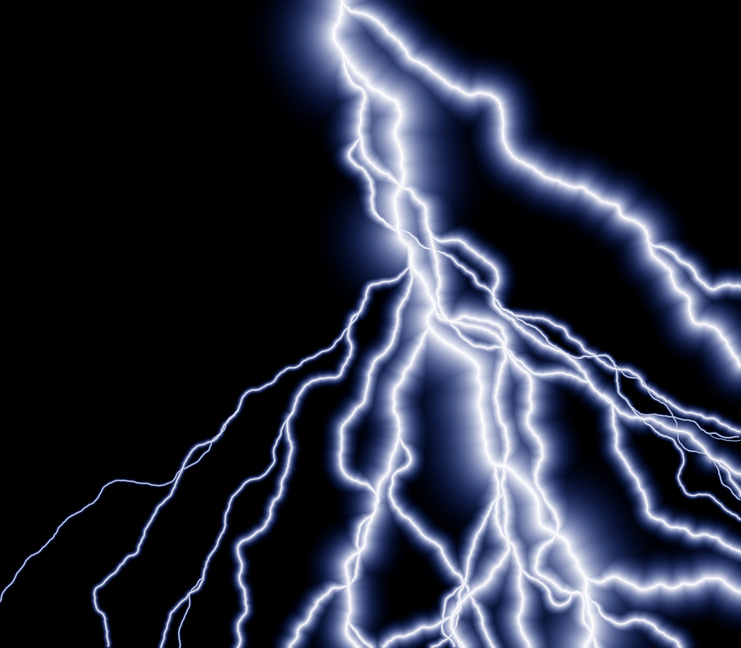
Lightning kills between 75 and 100 people nationwide annually.
During thunderstorms, stay inside. If you are outdoors, an automobile is a safe place to be. Indoors, keep away from doors, windows, stoves, sinks, metal pipes or other conductors. Disconnect electrical appliances such as TV’s, radios and computers.
Outdoors, minimize your height but don’t lie flat. Do not take shelter under a tree. Stay away from wire fences, overhead power lines and other metallic conductors. Avoid standing in small sheds in open areas.
Tornadoes
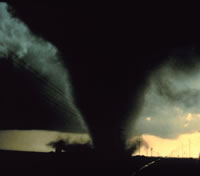
The most destructive and devastating product of a thunderstorm, these violent "twisters", are characterized by a twisting, funnel-shaped cloud, which forms from the bottom of a wall cloud and touches the ground.
Tornadoes are often accompanied by lightning, heavy rain and hail. In an average year, the United States reports 800 tornadoes resulting in 80 deaths and 1,500 injuries.
While they can occur all year, they are most common during the spring in the Great Plains, where they develop along “drylines,” which separate very warm, moist air to the east from hot, dry air to the west. Tornado-producing thunderstorms may form as the dryline moves east during the afternoon hours.
Nebraska is in the middle of tornado alley and each year the state averages 35 tornadoes.
Knowing tornado safety is your best hope for surviving. You must have a PLAN.
Stay tuned to the media when the watches are sounded and be prepared to seek shelter if a tornado warning is issued in your area. The safest place to be when a tornado strikes is in a basement under something sturdy like a workbench.
If your house doesn’t have a basement, seek shelter in a small room in the middle of the house. A closet or bathroom is best. The more walls between you and the approaching storm the better.
Have a portable radio and flashlight handy to take with you.
If you live in a mobile home, even those with tie-downs, seek more permanent shelter. Go to a prearranged shelter. Go to a friend’s house or a nearby structure with a basement. As a last resort, go outside and lie flat on the ground with your hands over your head and neck.
In an automobile, never try to outrun a tornado. Tornadoes can toss cars, and even large trucks, around like toys. Get out of your vehicle and seek a safe structure or lie down in a low area with your hands covering the back of your head and neck; keep alert for flash floods.
At Work or School, know the emergency shelter plans. If no specific plans exist, go to an interior hallway or small room on the building’s lowest level. Avoid areas with glass and wide, freespan roofs.
In a store or shopping mall, if you can’t get to a basement or designated shelter, go to the center of the lowest level of the building. Avoid windows and lie flat. Cover yourself with any handy object.
Most towns in Nebraska sound the sirens when tornado warnings are issued or a funnel cloud is sighted. Some times there are no warnings though. The best bet is to be aware of weather conditions and be prepared to seek shelter.
A Tornado Watch is issued when conditions are favorable for them to develop. Be prepared to take action.
A Tornado Warning is issued when radar indicates a tornado, or if a funnel cloud has been sighted. Seek shelter immediately.
Potential Shelter List
Welcome
We invite you to browse our web site to learn about our various County offices and the services Buffalo County, Nebraska offers its citizens.
LB304 - Annual Memberships
Follow us on for current info as well. for current info as well.
This web site contains information about County programs,services, departments and offices, as well as helpful information oncommonly asked questions. We encourage you to use this site frequently to access meeting notices, Open Meetings Act, agendas, packets, and minutes of the County Board of Commissioners.
Buffalo County uses Beacon Bid to share solicitations with suppliers. Click on any solicitation and fill out the free form on Beacon. Or subscribe for free updates for our future bids and RFPs. You will receive an email with the link to download attachments. Please note that accurate contact information is required in order to receive any updates.
Beacon is free for bidders.
|